Library
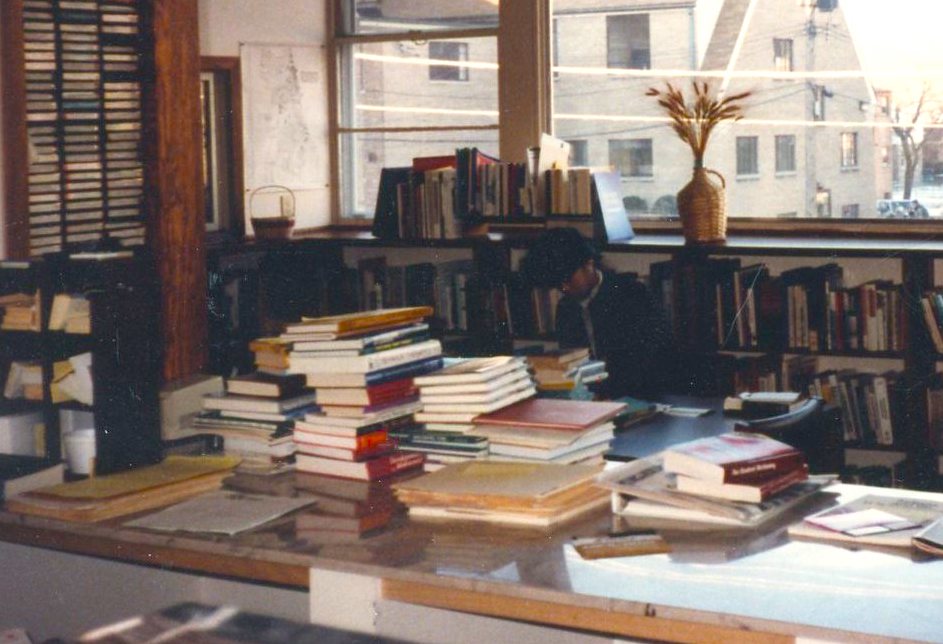
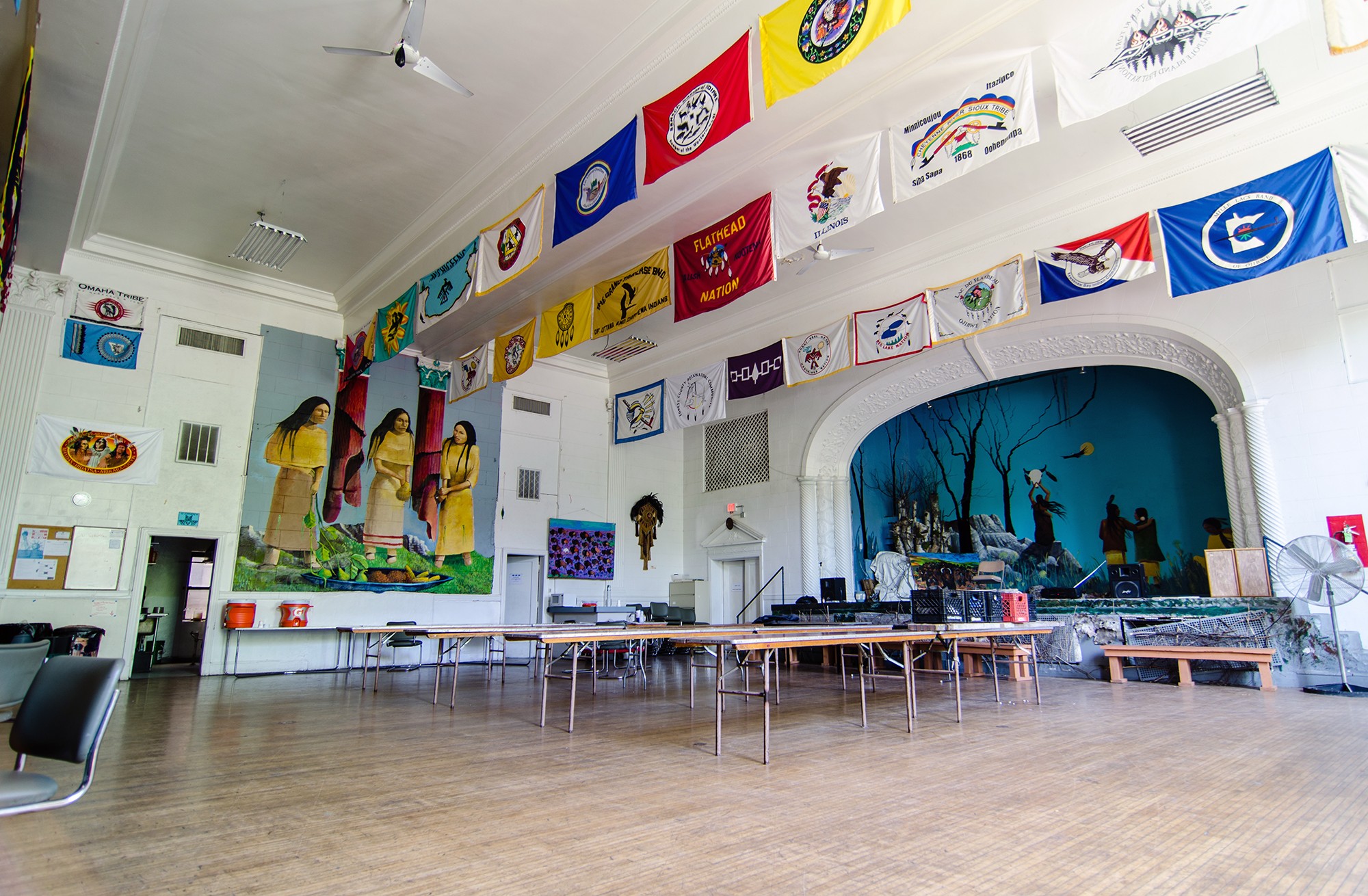
In many ways, the NAES College library was the heart of the college, a place where faculty, students, staff, and their relations came together to search, share, and celebrate tribal and academic knowledge in the form of books, newspapers, media, art, and in many other forms. Over the years, many students worked in the library, and throughout the decades, NAES librarians made significant contributions to the profession of librarianship and its archivists cared for the papers of significant Native American scholars, activists, and movements. A vital, open, and communal space of learning in Chicago, other NAES study sites also maintained libraries and archives, all in collaboration with each other and with close ties to tribes. On this page, we share more of what made up the NAES library and archives, including a snapshot of the collection from the 1980s and the unique and necessary Native-centered classification system developed at NAES.
The NAES College Library began collecting books and articles from its inception in 1974 and by the year 2000 had a collection of over 10,000 books on Native American and Indigenous subjects in arts and culture, government and law, history, anthropology, health, theory, and almost every other subject. In addition, there were over 2,000 flat files of papers, reports, pamphlets and articles collected from federal, tribal, state and private sources, along with many Native newspapers and journals. The library also collected and provided access to rare and unique Native language, history, and classroom materials that were produced at NAES College and other American Indian schools and organizations. Along with serving as an Indian repository for the U.S. Census Bureau, the NAES College Library also produced many audio and video tape recordings, including talks by tribal and community leaders that were collected as part of courses and visiting speaker events at the college, including Ho-Chunk language tapes and live video footage of events, powwows, and protests.
In the early decades of the library, librarians kept a physical card catalog which described, organized, and made findable all of the materials faculty, students, staff, and their relations might need as part of their experience at NAES College. Representing a unique view of the library in the mid-1980s, the “shelf list” cards in the catalog (representing ~2,500 unique works) were digitized and transcribed in 2019 and are available to download as a spreadsheet here. As part of this work, the database also contains highlighted resources representing original NAES publications, rare materials, and other interesting and unique items that speak to the range of topics and issues NAES faculty, students, staff, and their relations found important.
The NAES College Archives was established in 1984 when University of Chicago professor Sol Tax, a founding board member of NAES College, began the transfer of his professional papers of his “action-anthropological” work. From then on, the NAES College Archives grew substantially, stewarding the records and papers of many NAES faculty and important urban Indian organizations, initiatives, and movements. The archives included the papers of Ladonna Harris (now at University of Mexico), Rose Robinson, Ellen Carpenter, Susan Power, Robert Dumont, American Indian Business Association, Armin Beck, David Beck, NAES Press, American Indian Press Association, Chicago American Indian Community Organization Conference, American Indian Conference, Americans for Indian Opportunity, American Indian Health Services, David Beaulieu, Edith Johns, Michael Chapman, Robert Reitz, and many others.
Soon after the closing of NAES College in 2005, some of the archival collections were donated to the University of Chicago. You can find the complete list of those collections here.
Conventional cataloguing systems were not used at the NAES College Library, as, over the decades, librarians and other members of NAES envisioned, discussed, developed, and employed a Native and Indigenous-centered classification system developed specifically for the collections that supported the mission and philosophy of NAES College. Much like the more well-known classification system developed by Kahnawake librarian, Brian Deer, the “NAES College Public Policy and Tribal Research Center Subject Index,” is one of only a few Native and Indigenous-centered classification systems in existence. While several versions of this unique classification system exist in various drafts, the final version, completed in 2003 as NAES sought to move its library to an online database, is now made available for public download, use, and study.
Along with many administrative records, course materials, historic photographs, and other art and cultural heritage materials, the NAES College library and archive collections now constitute the “NAES College Collection,” currently cared for by the American Indian Association of Illinois.
The NAES College Collection consists of three main sub-collections: (1) the papers of the Chicago campus and affiliated study sites, (2) the Chicago campus library collection, and (3) the Chicago campus archival collections. The scope of the collection spans several decades from approximately 1970 to 2005. Vast and diverse, the collection contains items such as library books, card catalog, course syllabuses and related materials, school and financial records, student field projects, photographs, original publications, handmade signage, audio/visual and digital materials, Indigenous language learning materials, original artwork, and much more. The collection is estimated to contain at least 300 boxes at approximately 260 cubic feet.
How the Library Served the College Community
The NAES College library was never meant to be a quiet, closed room reserved for a few readers. Because the college served adult learners, many of them working, raising families, and active in their tribal and urban Indian communities, the library was a place to study, to meet, and to find materials that reflected their own histories and concerns. Students might come looking for a report on tribal government, a pamphlet on Indian health, or a recording of a speaker they had heard in a course.
Library staff worked closely with faculty and students to build the collection around what people were actually studying and doing. Course readings, research projects, and community questions all shaped what was gathered, which is why the holdings reach so far beyond what a typical college library would have shelved.
What Made the Collection Distinct
Much of the collection's value lay in materials that were hard to find elsewhere. Alongside published books, the library kept a wide range of "gray literature" and local documents:
- Reports, pamphlets, and articles from federal, tribal, state, and private sources
- Native newspapers and journals that were often short-lived or small in circulation
- Language and classroom materials produced at NAES College and other American Indian schools and organizations
- Audio and video recordings of talks, language lessons, powwows, and community events
Together these items documented Native life in Chicago and beyond from perspectives that mainstream libraries rarely collected. Many of them preserve voices and moments that exist nowhere else.
Why a Native-Centered Classification Mattered
Standard library classification systems were built around Western assumptions. They often scatter Native topics under outdated headings, or file tribal governance, law, and history in ways that do not match how Native communities understand them. A library that organizes knowledge differently changes how people find it, and what they think to look for.
By developing its own subject index, NAES librarians made the collection easier to use for people who wanted to approach the materials through tribal nations, community concerns, and Indigenous ways of organizing knowledge. The system reflects the college's mission and philosophy, and it stands as an important example of Indigenous librarianship in practice.
Using These Materials Today
The digitized shelf list, the subject index, and the lists of archival collections are offered so that researchers, students, librarians, and tribal community members can explore what NAES built. The shelf list is a useful way to see what a Native-centered library in the 1980s considered essential, and the subject index can be studied by anyone interested in alternative approaches to cataloguing.
For further reading and related materials, visit the Resources page, and see the Credits page for acknowledgment of the people who helped care for, transcribe, and share this work.